

)
Deforestation
)
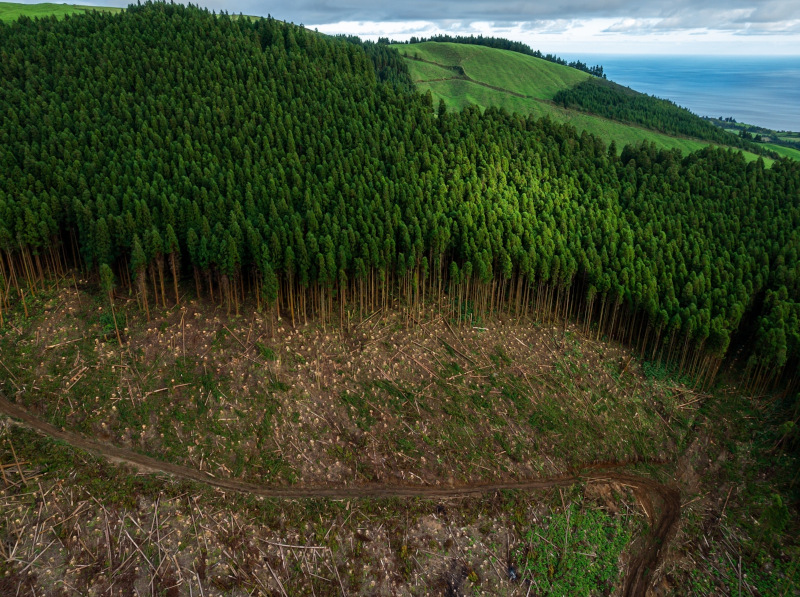
The global deforestation crisis has reached unprecedented levels, with forests disappearing at an alarming rate of 30 million hectares annually—equivalent to 27 soccer fields cleared every minute. This environmental catastrophe represents one of the most pressing challenges facing our planet, contributing significantly to climate change whilst threatening biodiversity on an unprecedented scale. For financial institutions and corporates worldwide, understanding deforestation risks has become essential for informed ESG investment decisions and sustainable business strategies.
Robust environmental data analytics enable organisations to assess forest-risk commodities and evaluate sustainable investment opportunities with precision. As the financial sector increasingly recognises the material risks associated with deforestation, comprehensive ESG data solutions provide the analytical foundation necessary for effective risk management and regulatory compliance. Advanced monitoring systems and scientific methodologies now offer unprecedented visibility into global forest loss patterns, empowering decision-makers to integrate environmental considerations into their strategic planning processes.
Global Deforestation Crisis: Scale, Drivers, and Environmental Impact Analysis
Statistical Overview and Geographic Distribution of Forest Loss
Global deforestation statistics reveal a crisis of staggering proportions, with satellite data and monitoring systems providing precise quantitative analysis of forest loss patterns worldwide. Since 1990, the planet has lost approximately 420 million hectares of forest cover—an area nearly twice the size of Argentina. This massive destruction translates to an average annual loss exceeding the current rate of 30 million hectares per year, with recent data showing acceleration rather than improvement in forest preservation efforts.
The geographic concentration of deforestation presents critical insights for ESG risk assessment. Approximately 95% of global forest loss occurs within tropical regions, with Latin America accounting for 59% of tropical deforestation, Southeast Asia responsible for 28%, and Africa contributing substantial additional losses. The Amazon rainforest alone experiences forest cover loss equivalent to several million hectares annually, representing the world's most significant deforestation hotspot.
Regional analysis reveals that tropical forests, which host 80% of terrestrial biodiversity, face the most severe pressure. Brazil accounts for 42% of all tropical primary forest loss globally, whilst countries like Bolivia have emerged as concerning new hotspots, with deforestation rates 98% off track from national targets. These geographic patterns enable financial institutions to identify high-risk regions and assess exposure to deforestation-linked investments with greater precision.
Primary Drivers and Economic Forces Behind Forest Destruction
Agricultural expansion dominates as the primary driver of deforestation, accounting for approximately 80% of global forest destruction. This systematic conversion of forested land to agricultural use reflects growing global demand for food, feed crops, and biofuels, fundamentally reshaping terrestrial ecosystems worldwide. Understanding these agricultural drivers enables comprehensive ESG data analysis to identify supply chain risks and investment exposures.
Cattle ranching emerges as the single largest driver of deforestation globally, responsible for 41% of tropical forest loss. Brazil's cattle operations alone account for 24% of global tropical deforestation, with ranching activities representing 72% of all forest destruction within Brazilian borders. This extensive land use practice requires vast areas of pastureland, leading to systematic forest clearing across Latin America and other regions where cattle production remains economically viable.
Palm oil production represents another critical driver, particularly concentrated in Southeast Asia where oil palm plantations have expanded rapidly. Indonesia produces half of global palm oil, with this expansion contributing significantly to rainforest destruction and habitat loss affecting endemic species. Agricultural commodities including soy cultivation, primarily used for livestock feed rather than direct human consumption, further compound deforestation pressures through global supply chain connections to meat production systems.
Climate and Biodiversity Consequences: ESG Risk Assessment Framework
Carbon Emissions and Climate System Disruption
Deforestation contributes an estimated 12-20% of global greenhouse gas emissions, fundamentally disrupting climate regulation systems through both carbon release and elimination of natural sequestration capacity. When forests are destroyed, stored carbon in trees and soil systems is released as carbon dioxide, immediately contributing to atmospheric greenhouse gas concentrations whilst simultaneously removing the ongoing capacity for carbon absorption.
The climate implications extend beyond direct emissions to encompass complex feedback mechanisms affecting regional and global weather patterns. Tropical rainforests, particularly the Amazon, regulate global rainfall patterns through evapotranspiration processes that influence atmospheric moisture circulation across vast geographic areas. Forest destruction disrupts these hydrological cycles, potentially causing altered precipitation patterns that affect agricultural productivity and water security across entire continents.
Recent data reveals that 2024 fires alone generated 4.1 gigatons of greenhouse gas emissions, equivalent to more than four times the emissions from global air travel. This demonstrates how deforestation both contributes to and is exacerbated by climate change through accelerating feedback loops. Advanced ESG data systems enable financial institutions to quantify these climate risks and assess alignment with Paris Agreement objectives through comprehensive environmental impact analysis.
Biodiversity Loss and Ecosystem Service Degradation
Forest ecosystems host approximately 80% of terrestrial biodiversity despite covering only a fraction of Earth's land surface, making habitat destruction a primary driver of species extinction worldwide. The complexity and interconnectedness of forest ecosystems mean that deforestation affects entire food webs and ecological relationships evolved over millions of years. Many forest-endemic species cannot survive in alternative habitats, making forest loss a direct pathway to irreversible biodiversity loss.
Ecosystem service degradation represents another critical consequence, with forests providing essential environmental services including air purification, water cycle regulation, and soil erosion prevention. The economic value of these ecosystem services often exceeds the short-term revenue generated through forest conversion, though these benefits typically accrue to different stakeholders than those making land use decisions.
Indigenous communities, representing over one billion people who depend directly on forest resources, face displacement and livelihood disruption through forest destruction. Soil degradation and water cycle disruption create lasting impacts on landscape productivity, often leading to declining agricultural yields that drive further forest clearing as farmers seek new fertile land to replace degraded areas.
Technology Solutions and ESG Data Analytics for Deforestation Monitoring
Satellite Monitoring and AI-Driven Forest Analytics
Cutting-edge satellite technology and artificial intelligence applications provide unprecedented capabilities for real-time forest monitoring and ESG risk assessment. Synthetic aperture radar (SAR) technology enables continuous monitoring regardless of weather conditions, overcoming traditional limitations of optical imagery obscured by cloud cover. These advanced systems detect forest changes with remarkable precision, enabling identification of illegal logging and unauthorised land clearing as events occur.
AI-powered analysis of satellite imagery enables processing of massive datasets that would be impossible to analyse through traditional methods. Companies now provide biweekly alerts about deforestation events globally, with plans to reduce response times to less than one week. These forensic-level detection capabilities provide evidence supporting legal proceedings against illegal deforestation, whilst enabling proactive risk management for financial institutions.
Integration with ESG data platforms enables real-time risk assessment and compliance verification for investment portfolios and lending activities. Advanced monitoring systems can distinguish between different types of forest disturbance, identifying whether losses result from natural events or human activities, providing the analytical foundation necessary for informed decision-making in sustainable finance initiatives.
Supply Chain Traceability and Corporate Risk Management
Advanced data analytics enable comprehensive supply chain transparency and corporate deforestation risk management through blockchain-based commodity traceability systems. These technologies create immutable records of commodity sourcing, enabling companies to verify that supply chains remain free from deforestation-linked products. However, implementation remains challenging due to supply chain complexity, with large consumer goods companies often sourcing from over 50,000 direct suppliers.
Corporate supply chain mapping and risk assessment tools integrate with financial risk management frameworks, providing regulatory compliance support for emerging legislation. ESG scoring and investment decision support tools enable financial institutions to assess client exposure to deforestation-linked commodities whilst supporting sustainable finance initiatives through comprehensive risk analysis.
International cooperation and policy frameworks provide essential foundations for effective monitoring systems. The proposed FOREST Act aims to prohibit imports of products linked to illegal deforestation, creating market incentives for sustainable production practices. However, successful implementation requires robust monitoring capabilities, adequate enforcement funding, and coordinated action across multiple jurisdictions to prevent displacement of deforestation to regions with weaker regulatory frameworks.
The integration of technology solutions with comprehensive ESG data analytics represents a critical advancement in addressing global deforestation challenges. These tools enable financial institutions and corporates to make informed decisions based on real-time environmental data, supporting the transition towards sustainable business practices whilst managing material environmental risks effectively. As deforestation continues to accelerate globally, the importance of advanced monitoring and analytical capabilities will only increase, making investment in these technologies essential for responsible environmental stewardship and long-term business sustainability.
)
)
)
)
)
Related Articles
You might be interested in these articles








Get in touch!
Want to know more? Fill out the form or reach us directly via email at contact@icebergdatalab.com.
75009 Paris
EC2Y 9DT London
60327 Frankfurt am Main, Frankfurt




Companies rated by Iceberg Data Lab may contact us for inquiries related to their assessment or entity information by emailing queries@icebergdatalab.com