


New research shows high-biodiversity-impact issuers pay more for capital
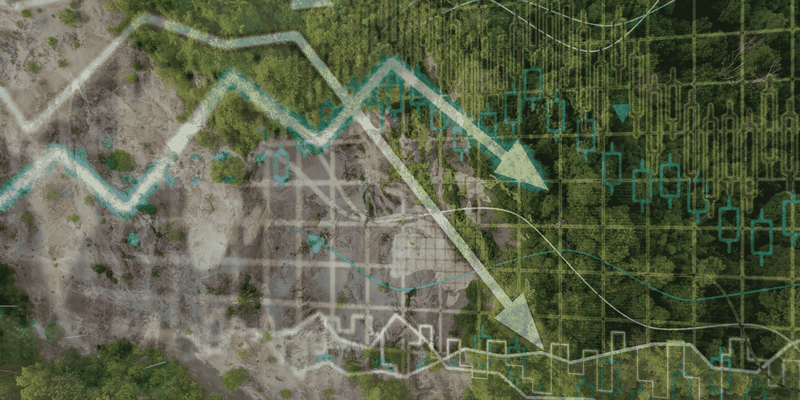
Across equities, bonds and loans, markets are pricing in biodiversity impacts and risks. After COP15, a one-standard-deviation increase in a firm’s biodiversity footprint came with an 11% increase in bond underwriting fees. Borrowers with higher biodiversity risk pay significantly higher loan spreads. Companies with lower biodiversity and climate risk earned higher returns than high-risk companies over 2008–2023.
These are just some of the findings from new sustainable finance research released this year.
Biodiversity supports nearly half of global GDP, and most firms depend on it directly or indirectly through their supply chains. However, before 2024 the impact of biodiversity loss on markets was not well established. Only in the past three years has the academic community ramped up research on biodiversity and financial markets.
In 2026 so far, a number of new papers have built on formative work by Garel et al. (2024) and Coqueret et al. (2025) using Iceberg Data Lab’s biodiversity dataset.
Bonds: Research by Binghamton University scholars (Soylemezgil, Tran and Uzmanoglu, 2026) uses Iceberg Data Lab’s Corporate Biodiversity Footprint (CBF). After COP15, firms paid 11% higher bond underwriting fees for each one-standard-deviation increase in their biodiversity footprint. The 25% of companies with the most severe negative impacts on biodiversity pay 55% higher underwriting fees, which adds more than $3 million on average to the cost of issuing a bond.
Equities: Researchers at Lund University and RMIT (Asgharian et al., 2026) used IDL’s CBF, Corporate Dependency Score, and Transition and Physical Risk data. They found that companies with lower biodiversity and climate risk earned higher returns than high-risk companies over 2008–2023. The authors attribute this to repricing: as more investors pay attention to these risks, they move into lower-risk companies and push their prices up.
Loans: A Lund University study (Asgharian et al., 2025) matched global syndicated loan data with IDL’s biodiversity impact and dependency data. It found that all lenders extend smaller loans to firms that depend more on biodiversity. In other words, banks treat dependency risk as financially material.
Firm value: Cosma et al. (2025) analysed the CBF of 1,848 listed companies across 49 countries from 2018 to 2022. Firms with a higher biodiversity footprint face lower margins and weaker operating performance driven by rising operational and compliance costs combined with increased stranded assets. They also bring in less cash from day-to-day operations, and that cash is less predictable from year to year. Together, these effects reduce firm value. The effects are stronger for large firms and producers of physical goods, and sharper in high-conservation countries.
Researchers are also recognising the CBF itself. Wenzel (2026) recognises it as “the first science-based indicator to help managers and investors assess companies' biodiversity impact”. In a 2026 chapter on measuring biodiversity exposure for banks, Rimo and Cosma describe the CBF as “one of the most advanced methods for translating corporate activities into measurable ecological impacts”.
The writing on the wall is clear. Financial institutions that don’t include biodiversity risks and impacts in their risk management processes will face significant blind spots.
Latest News

New research shows high-biodiversity-impact issuers pay more for capital

Reforming harmful incentives: why we signed the open letter for nature

Iceberg Data Lab Registered By ESMA Under EU ESG Data Provider Regulation

2026 Kickoff: Reflecting on a Milestone 2025 at Iceberg Data Lab

Welcoming Iceberg Data Lab's Newest Clients of 2026
Related Articles
You might be interested in these articles








Get in touch!
Want to know more? Fill out the form or reach us directly via email at contact@icebergdatalab.com.
75009 Paris
EC2Y 9DT London
60327 Frankfurt am Main, Frankfurt

Companies rated by Iceberg Data Lab may contact us for inquiries related to their assessment or entity information by emailing queries@icebergdatalab.com